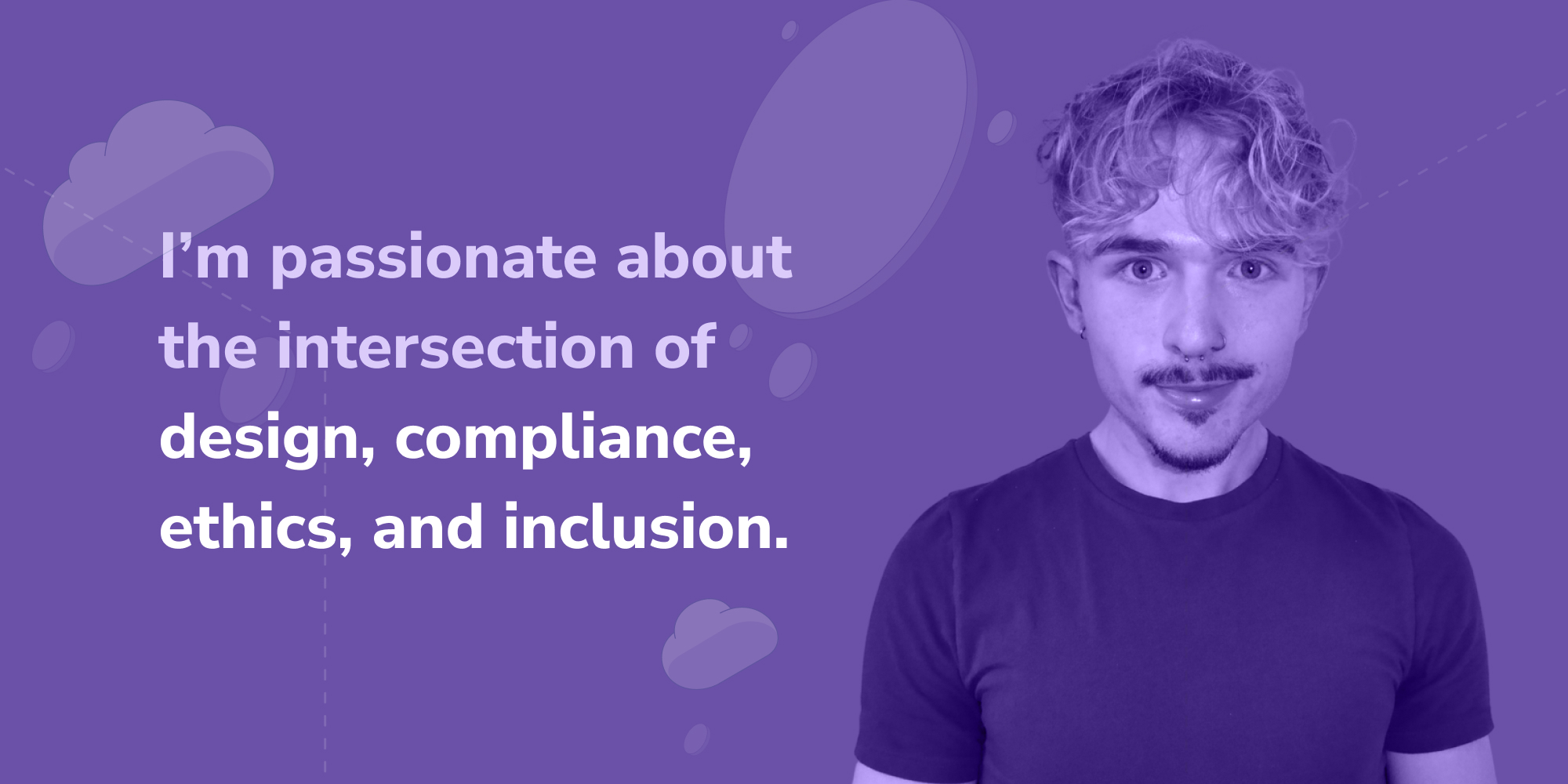
Hi, I’m Adam — a Graduate Designer at Big Motive.
I’m passionate about the intersection of design, compliance, ethics, and inclusion. I believe creating safe, legal, ethical, and accessible products is a responsibility shared by every designer. Through my previous work across industries including cybersecurity and healthcare, I’ve seen first-hand the challenges teams face when navigating these complex requirements within modern design workflows.
This experience inspired me to create Fairway, a product designed to help bridge the gap between design and compliance. It’s a project I care deeply about, and I’m so excited to be sharing it here.
Outside of design, I’m also a professional harpist. When I’m not working, you’ll usually find me in the gym, exploring a forest trail, or browsing the gluten-free aisle in Tesco. This summer, I’m relocating to Manchester to continue my journey with Big Motive while discovering everything a new city has to offer.
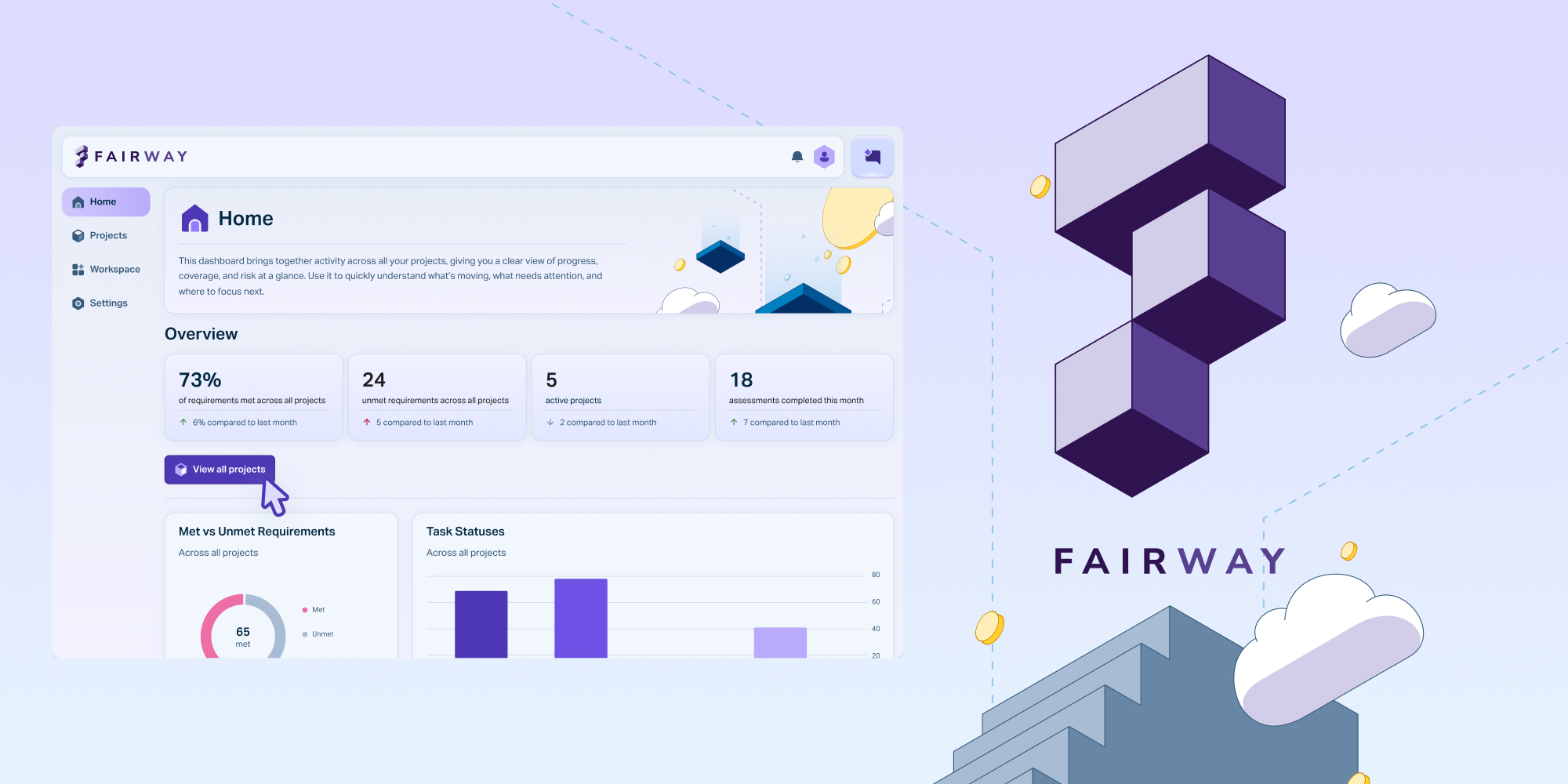
Designing responsible digital products requires more than functional requirements. Teams must also navigate compliance, ethics, and inclusivity, each bringing added complexity and expectations. In practice, these considerations are often disconnected from the design process, leading to inconsistency, late-stage validation, and increased risk across the product lifecycle.
Fairway addresses these challenges by embedding compliance, ethics, and inclusivity directly into the design process. Rather than separate policies or late-stage checks, these considerations become clear, actionable requirements from the outset, creating a continuous and integrated workflow.
Using AI, Fairway interprets relevant frameworks and adapts them to each project’s context. Requirements are structured and connected to design artefacts, giving teams clarity, reducing ambiguity, and supporting more consistent decision-making throughout the product lifecycle.
Fairway also introduces continuous assessment. Design prototypes can be evaluated against defined requirements, generating risk insights, visualised reporting, and targeted feedback. Teams can act on this feedback in real time, iterating on their designs and reassessing as they progress. This creates a repeatable loop where compliance, ethical considerations, and inclusivity are actively improved rather than retrospectively checked.
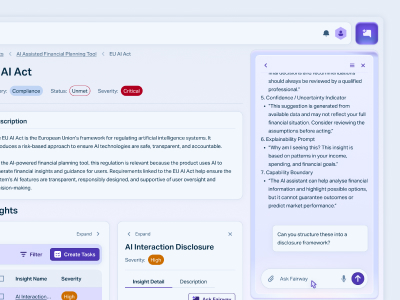
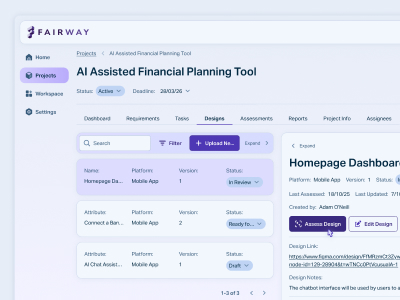
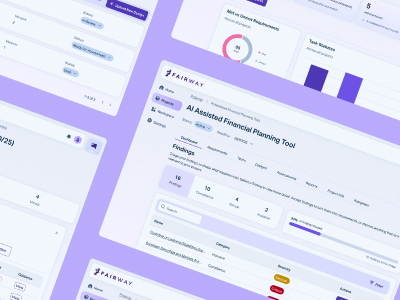
Fairway begins by helping teams establish the scope, context, and objectives of a project from the outset. From there, it identifies the frameworks, risks, and requirements that apply, providing a clear understanding of the obligations that need to be considered. It then translates these requirements into practical design actions, embedding guidance directly into existing workflows so teams can apply standards and best practices as products are designed.
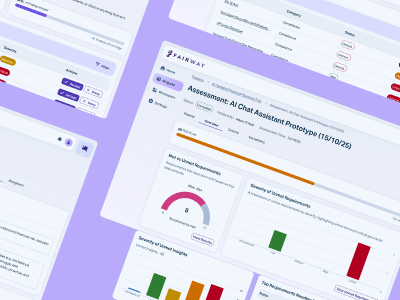
Throughout the design process, Fairway continuously evaluates work against defined requirements. It can review prototypes, highlight potential risks, and provide actionable feedback, enabling teams to make better decisions earlier.
As projects progress, Fairway creates a clear record of decisions, rationale, and outcomes, strengthening accountability by making key actions visible, structured, and traceable. When gaps, risks, or issues are identified, Fairway helps teams prioritise improvements, refine designs, and reassess progress through an iterative cycle of evaluation and enhancement.
Finally, Fairway generates clear insights and evidence for stakeholders through dashboards, summaries, and PDF exports, demonstrating how relevant standards, regulations, and requirements have been considered and met.
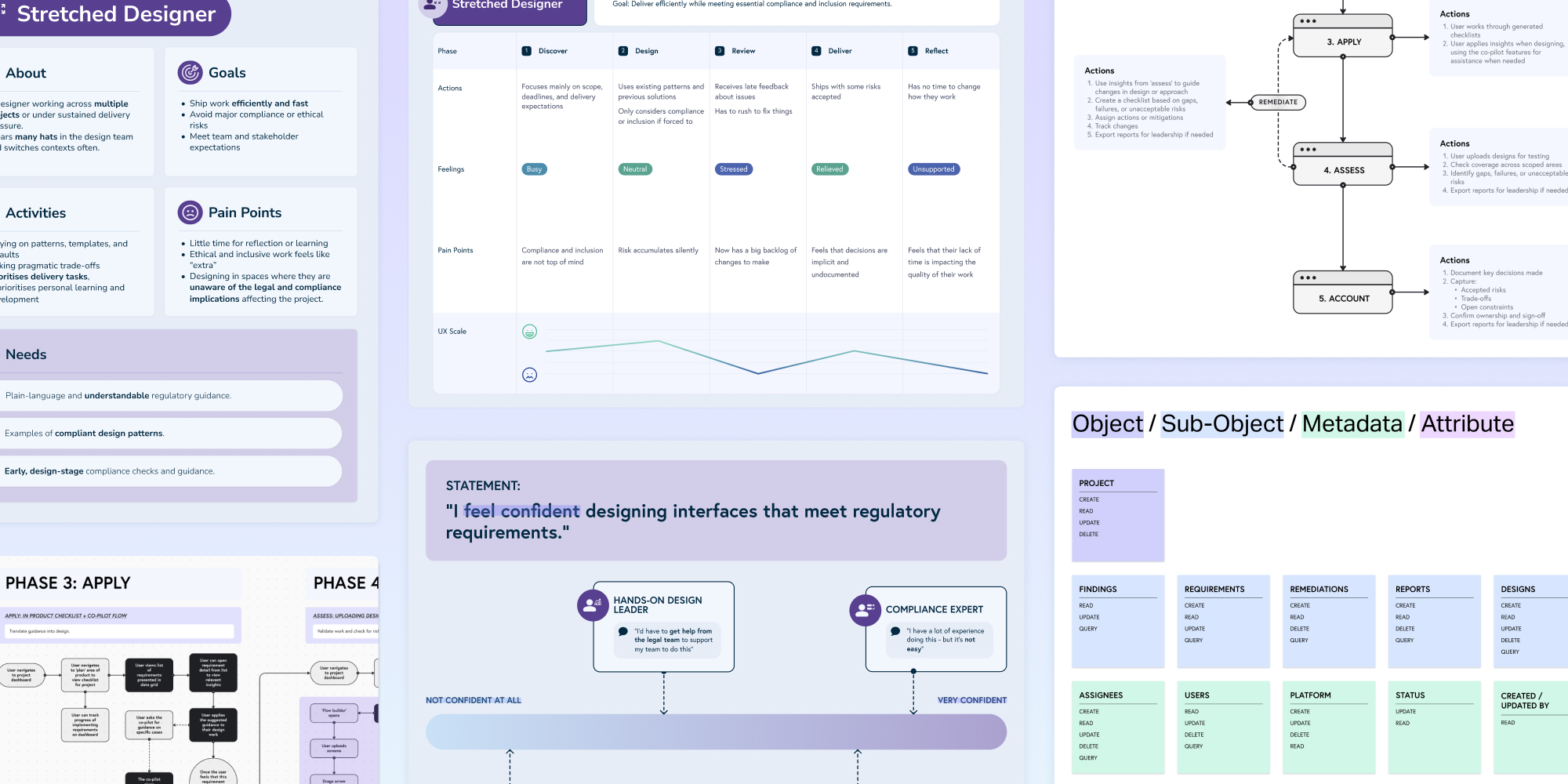
The Fairway design process was shaped by research, collaboration, and iteration. The goal was to understand the real challenges teams face when designing products in regulated and high-risk environments, then turn those insights into a practical platform.
Discovery included surveying designers to uncover common pain points such as unclear requirements, late-stage reviews, and fragmented ownership. Conversations with subject matter experts across design, legal, compliance, accessibility, and product added deeper insight into current processes, risks, and opportunities.
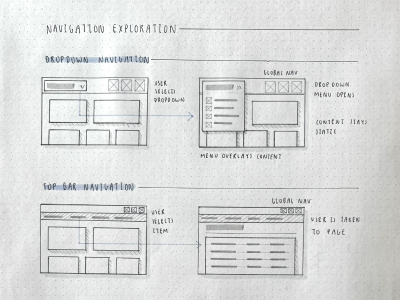
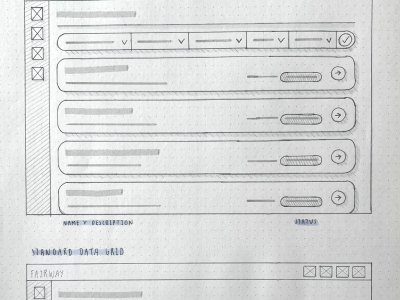
These findings were translated into user personas representing key audiences across the product lifecycle. Journey mapping was then used to visualise existing workflows, identify friction points, and highlight where Fairway could provide the greatest value.
Concepts were developed through wireframes, prototypes, and iterative refinement. Ongoing feedback helped shape a solution that balances complexity with clarity, creating a platform grounded in real needs and informed by expert knowledge.
Fairway’s mission is to make responsible product design practical, scalable, and built into the way digital products are created. We believe compliance, ethics, and inclusivity should not be barriers to innovation or tasks left until the end of a project. They should be clear, actionable, and embedded from the start.
By combining structured workflows with AI-powered guidance, Fairway aims to help teams navigate complexity with confidence, make better decisions earlier, and create products that are trustworthy, inclusive, and defensible.
Our goal is to raise the standard of digital product design by making accountability a natural part of the process, not an afterthought.